
Reading Room
Inside Sanabel Abdel Rahman’s cultural landscape: books, ideas, artists, practices and other references that shape the way she thinks and sees the world.
READ - The books that shaped her imaginary
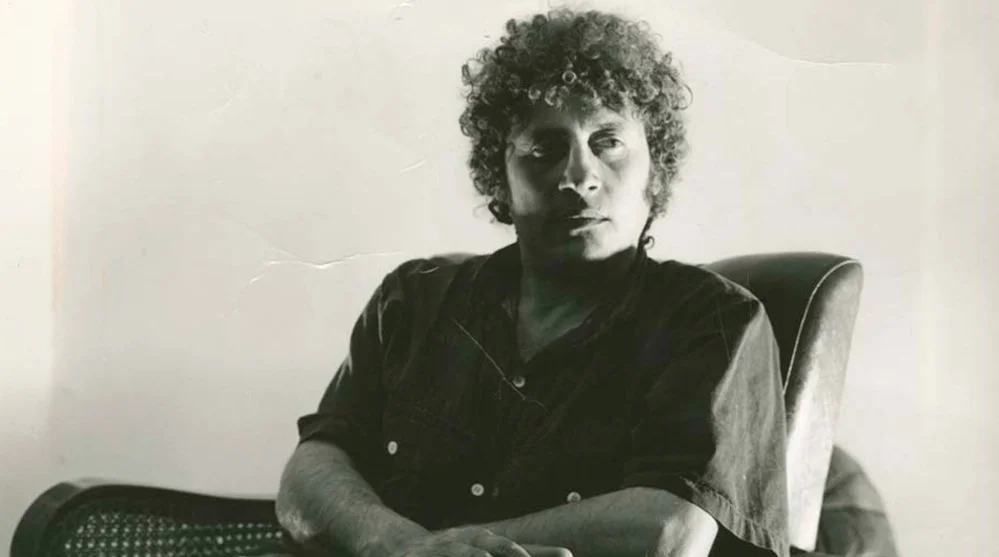
Hussein Barghouthi
Sanabel’s thinking begins with stories: oral tales passed between generations, literary traditions that refuse the boundaries of realism, and contemporary fiction that uses the fantastic to approach histories of violence, exile and dispossession. This selection follows some of the texts that form the landscape of her research and writing — from Palestinian folklore to Arabic literature, Latin American magical realism and contemporary speculative fiction.
Speak, Bird, Speak Again: Palestinian Arab Folktales
Ibrahim Muhawi & Sharif Kanaana, 1989
A foundational collection of Palestinian oral narratives gathered from the Galilee, Gaza and the West Bank. Its forty-five tales are populated by animals, jinn, ghouls, ogres, magical transformations and enchanted objects. Sanabel returns to the collection constantly, drawing on it not only as an archive of Palestinian storytelling but as a source for understanding Palestinian worldviews and the roots of magical realism.
The Thousand and One Nights
A foundational collection of stories shaped over centuries through Arabic oral and literary traditions. Built around Scheherazade’s nightly storytelling, its worlds unfold through stories within stories, shifting voices, transformations and encounters with the supernatural. For Sanabel, this tradition of fluid, collective storytelling offers one of the deep roots of magical realism.
The Blue Light
Hussein Barghouthi
A genre-defying work moving between memoir, philosophy, fiction, memory and perception. The book’s shifting relationship between the human, the animal, the landscape and the imagination is central to Sanabel’s thinking. One of her reading groups, About Some of What the Falcon Saw, takes its title from a chapter in the book and explores its questions through Palestinian literature and folklore.
The Secret Life of Saeed: The Pessoptimist
Emile Habiby, 1974
A foundational work of Palestinian literature that uses satire, absurdity and the fantastic to approach the political reality of Palestinians after 1948. Habiby’s use of the absurd is a reminder that political literature does not need to reproduce reality literally in order to speak directly to it.
The Book of Disappearance
Ibtisam Azem, 2014
A speculative novel in which Palestinians in Israel suddenly disappear. The book explores absence, memory, disappearance and the unstable relationship between people and place — questions that resonate strongly with Sanabel’s interest in distorted spaces and alternative forms of return.
Crying Over the Ruins
Ghālib Halasā, 1980
A novel of exile, memory and cultural displacement. Its title invokes the classical Arabic literary tradition of the aṭlāl — the ruins of a place once inhabited — and turns those ruins into a site from which another world can be imagined.
The Impossible Novel: Damascene Mosaic
Ghada al-Samman, 1997
A landmark work by Syrian writer Ghada al-Samman, blending memory, dreams, visions and fiction in a fragmented portrait of Damascus. Published in 1997, the novel moves beyond conventional realism to explore the entanglement of personal memory, the city and the imagination.
Le Fils empaillé
Vénus Khoury-Ghata, 1980
A novel by Lebanese-French poet and writer Vénus Khoury-Ghata, set in Lebanon in the 1950s and narrated through the eyes of Diane, the daughter of a troubled family. Blending family memory, violence, surreal imagery and playful distortions of language, the novel turns everyday reality into something strange and unstable.
One Hundred Years of Solitude
Gabriel García Márquez, 1967
A defining work of Latin American magical realism, where ghosts return, prophecies come true and extraordinary events unfold alongside the everyday. Across seven generations of the Buendía family in Macondo, magical and political realities become inseparable. A landmark of the genre, the novel has since entered the mainstream, most recently through Netflix’s 2024 adaptation.
The House of the Spirits
Isabel Allende, 1982
A multigenerational novel by Chilean writer Isabel Allende in which political upheaval, family history and the supernatural become inseparable.
Beloved
Toni Morrison, 1987
A novel in which the violence of slavery returns as a literal haunting. Morrison’s ghosts refuse to remain in the past: they inhabit the present, memory and the bodies of the living.
Mā’ Ward (Rosewater)
Sanabel Abdel Rahman
A book of Arabic fiction and analogue photography. Mā’ Ward is an account of witnessing the genocide in Gaza from Tunis. The poetics of the North African city could not prevent the familiar Palestinian melancholy from entering through the sea. This is, in essence, what the book is about.
THINK - The ideas behind her practice
Across her research, Sanabel draws on Indigenous studies, decolonial thought and environmental humanities to question how colonialism shapes not only land and bodies, but also imagination, temporality and ecological belonging.
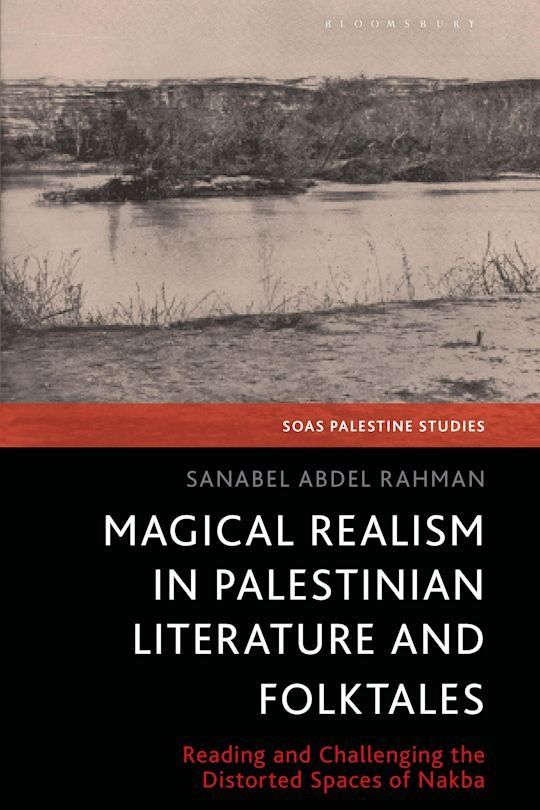
Magical Realism in Palestinian Literature and Folk Tales: Reading the Distorted Spaces of the Nakba
Sanabel Abdel Rahman
Sanabel’s forthcoming book, developed from her doctoral research, examines magical realism in Palestinian literature and folk tales through the idea of “distorted spaces” — physical, spiritual, intellectual, memorial, metaphysical, social, political and creative spaces shaped by the Nakba and its ongoing ramifications.
Rather than treating magical realism as an escape from reality, the book asks how distortion can become a form of agency: a way of bending imposed realities and practising the possibility of another future.
Eve Tuck
Researcher and scholar whose work on Indigenous sovereignty, decolonisation and the politics of knowledge informs questions of land, dispossession and colonial frameworks.
Joni Adamson
Scholar of Indigenous literatures and environmental justice whose work connects environmental humanities with questions of colonialism, sovereignty and ecological knowledge.
Salma Monani
Scholar working across environmental humanities, Indigenous studies and environmental media, particularly around the ways ecological stories are produced and circulated.
Pietari Kääpä
Scholar of environmental media and ecocinema whose work examines climate storytelling, environmental politics and the colonial histories that ecological narratives can conceal.
C. Ree
A scholar whose work, alongside Indigenous approaches to climate fiction and environmental storytelling, contributes to Sanabel’s thinking about how narratives of ecological catastrophe can obscure the histories and structures that produce them.
LOOK -The artists who expand these ideas
Jumana Emil Abboud
Sanabel’s universe is populated by more than humans. Animals, plants, ghosts, jinn, ghouls and other transformed beings inhabit the space between folklore, literature and contemporary artistic practice. These artists offer different ways of thinking through those porous boundaries — between body and landscape, human and animal, memory and myth.
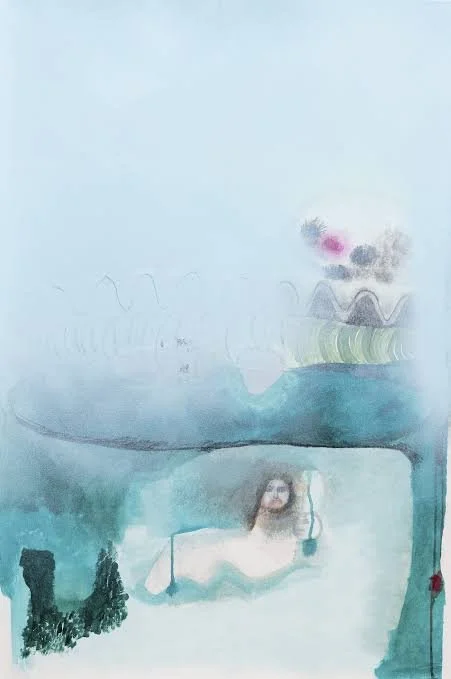
Jumana Emil Abboud
Palestinian artist whose videos, installations and storytelling practices draw on folklore, memory, landscape and the uncanny. Her work often moves between inherited stories and contemporary forms of narration, treating folklore as a living and unstable archive.
Raghad Rasras
Jordanian-Palestinian artist whose practice brings together conceptual art, spiritual healing, liberational psychology, talismans and collective rituals. Her work explores imagination and transformation as forms of embodied knowledge.
Samara Sallam
Palestinian artist, journalist and hypnotherapist whose work moves between language, biopolitics, psyche and storytelling. Her practice considers the imagination as a space in which personal and political realities can be reconfigured.
MAKE - Sanabel’s own tools and practices
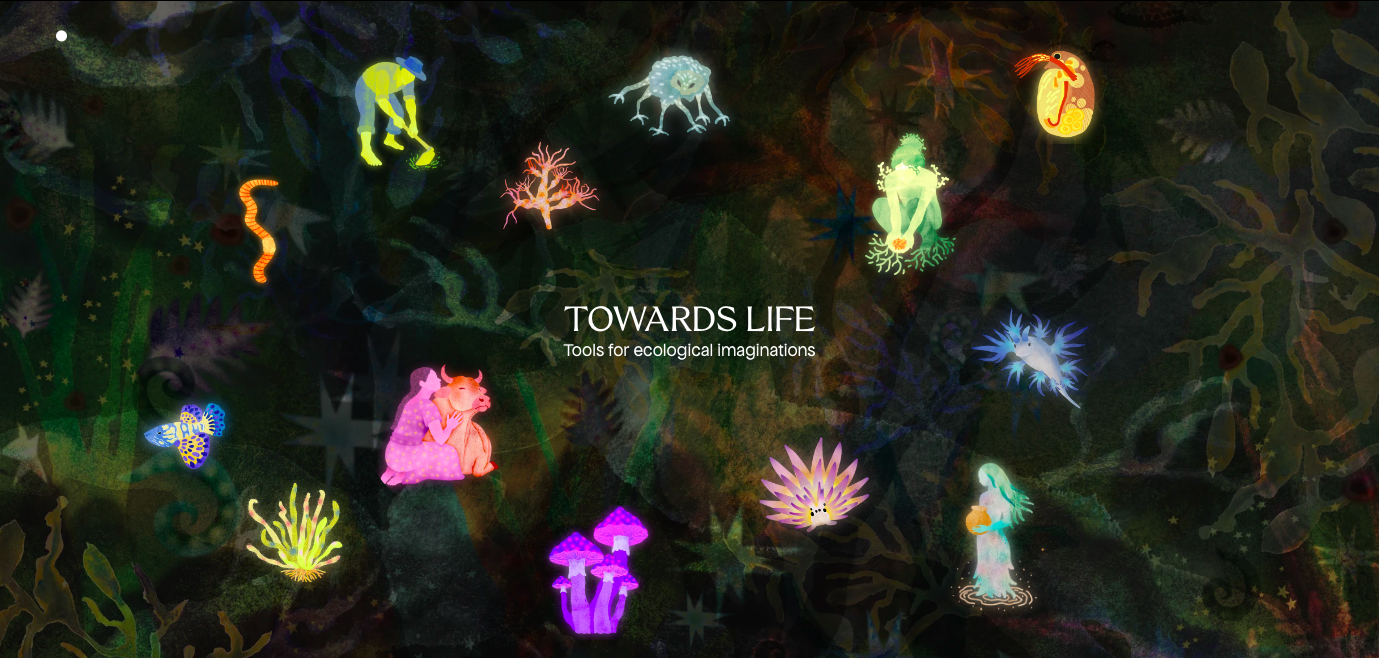
Towards Life: Tools for Ecological Imaginations
For Sanabel, research does not stop at interpretation. Literature, folklore and theory become tools: ways of rehearsing other relationships to land, bodies, memory and the future.
ʻAyn Ḥawḍ
An interdisciplinary research and artistic practice initiative co-founded by Sanabel Abdel Rahman and Gabriel Possamai. Through reading and writing sessions, film programmes and collective research, ʻAyn Ḥawḍ brings Arabic and Latin American literature and cinema into conversation with Palestinian folklore, ecology and questions of futurity.
Towards Life: Tools for Ecological Imaginations
A participatory project exploring solidarity, human justice and climate justice across the Global South through artists, conversations and commissions. The project developed a digital glossary of “tools” — imaginative practices designed not simply to describe alternative futures, but to help make them thinkable and materially possible.
Here, magical realism becomes one tool among others: a practice for bending the limits of what can be imagined, and therefore of what can be built.
